
News
Yokohama, Japan with a Teddy Bear – Unmissable Places to Visit
Sep
Yokohama is the sort of city that makes a traveller want to keep looking around the next corner. Japan’s great international port combines glittering towers, broad waterfront promenades, historic brick buildings, fragrant gardens and one of the world’s most enjoyable Chinatowns. It feels energetic without being overwhelming, and it is close enough to Tokyo for an easy day trip while offering more than enough to justify a longer stay.
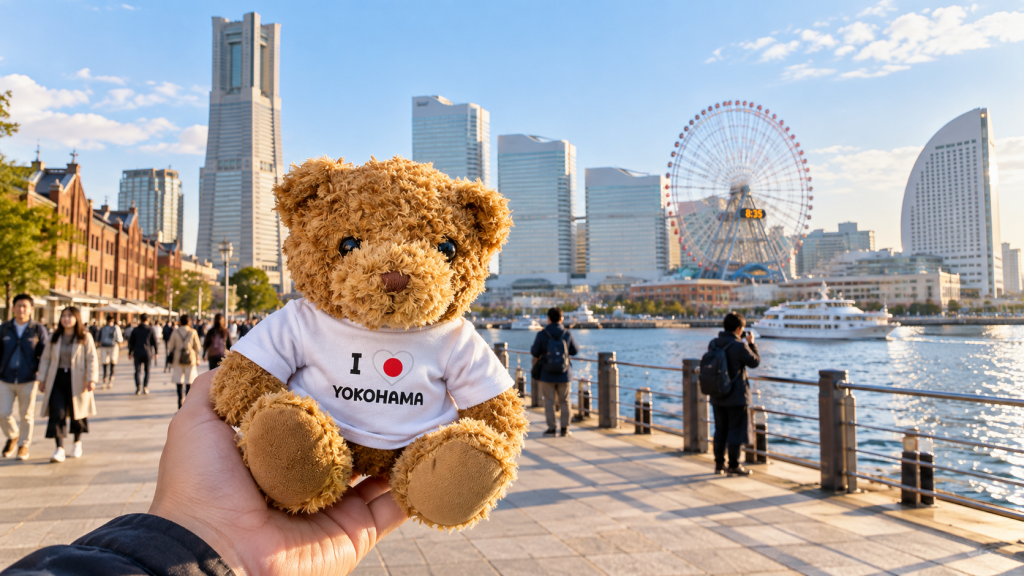
Our cheerful travelling companion is the 20 cm I Love Yokohama Japan Flag Teddy Bear. Wearing his unmistakable white Yokohama T-shirt, he is ready to discover six of the city’s most memorable places. This guide mixes famous waterfront sights with culture, gardens, food and playful family entertainment, giving first-time visitors a varied introduction to Yokohama.
1. Step Into Yokohama’s Port History at the Red Brick Warehouse

The Yokohama Red Brick Warehouse is an ideal first stop because it captures the city’s transformation from working port to stylish modern destination. The two handsome customs warehouses date from the early twentieth century. Their deep red brickwork, long rows of windows and waterfront setting make them among Yokohama’s most recognisable buildings.
Today, the warehouses contain shops, cafés, restaurants, cultural spaces and event halls. The broad plaza outside regularly hosts seasonal celebrations, markets and performances. Even when no major event is taking place, it is a pleasant area for a slow wander, a coffee and photographs with the harbour skyline behind you. The contrast between the industrial architecture and the sleek towers of Minato Mirai tells Yokohama’s story in a single view.
Allow time to walk around both buildings rather than simply photographing the façade. The waterside edge leads naturally towards nearby parks, museums and piers, so the warehouse makes a practical anchor for a day on foot. At sunset, the brick glows warmly and the illuminated city begins to reflect across the bay.
2. Find Calm and Centuries of Beauty at Sankeien Garden

After the modern waterfront, Sankeien Garden reveals a quieter side of Yokohama. This spacious traditional Japanese garden was created by silk trader and art patron Sankei Hara. Historic buildings were moved here from locations across Japan, creating an atmospheric landscape of ponds, paths, bridges, tea houses and carefully framed views.
The garden’s three-storey pagoda rises above the trees and provides a striking focal point. Yet Sankeien rewards unhurried exploration: koi move beneath the water, stone lanterns appear beside shaded paths, and old wooden buildings invite you to notice the craft of another era. Plum blossom, cherry blossom, lotus flowers and autumn leaves give the garden a changing personality through the seasons.
It is worth wearing comfortable shoes and allowing at least a couple of hours. Stop occasionally rather than rushing between landmarks; the reflections on the main pond and the view towards the pagoda are part of the pleasure. Opening arrangements and seasonal events can change, so consult the official website before travelling.
3. Taste Your Way Through Yokohama Chinatown

Colour, aroma and movement fill Yokohama Chinatown, one of the city’s liveliest districts. Ornate gates mark the entrances to a dense network of streets lined with restaurants, bakeries, food stalls, gift shops and temples. Lanterns hang overhead, elaborate signs compete for attention and tempting smells make it very difficult to pass every counter.
Come hungry. Steamed buns, dumplings, sesame sweets, noodles and Chinese pastries are easy to sample as you explore. A sit-down meal opens up an even wider range of regional dishes, while the neighbourhood’s tea shops offer a quieter pause. Rather than choosing the first busy street, explore the smaller lanes as well; they often contain fascinating shops and less hurried places to eat.
The Kanteibyo and Masobyo temples add spiritual and architectural depth to the visit. Be respectful around worshippers and observe any photography guidance. Chinatown becomes especially atmospheric as evening approaches and the lights come on, but daytime makes it easier to study the richly decorated gateways and building details. It is within easy walking distance of Yamashita Park, making the two stops easy to combine.
4. Stroll Beside the Bay at Yamashita Park

Yamashita Park gives Yokohama something every great harbour city needs: a generous place to walk beside the water. Lawns, flowerbeds, benches and broad paths stretch along the bay, with ships passing offshore and the modern skyline visible in the distance. It is free, relaxed and particularly welcome after Chinatown’s energetic streets.
The most prominent sight is Hikawa Maru, a preserved ocean liner moored beside the park. Launched in 1929, the ship once carried passengers across the Pacific and now serves as a museum. Its black hull and striped funnel create one of Yokohama’s classic waterfront views. The park also contains statues and monuments reflecting the city’s international connections.
Visit early for a peaceful walk, or arrive later to watch the changing light over the harbour. Families can enjoy the open space, photographers can frame ships against the skyline, and anyone with tired feet can simply choose a bench and watch the bay. The park also connects conveniently with the Marine Tower area, Chinatown and the waterfront route towards Osanbashi.
5. Create Your Own Snack at the Cup Noodles Museum

Few museums turn an everyday cupboard favourite into such an inventive experience. The Cup Noodles Museum Yokohama celebrates Momofuku Ando, the entrepreneur behind instant ramen, while exploring creativity, persistence and product design.
Displays trace the development of instant noodles and show how a simple idea grew into a global phenomenon. The most popular activity is the My CUPNOODLES Factory, where visitors decorate a cup and choose a soup and toppings to make an individual combination. Other experiences may have separate charges, age rules, numbered tickets or advance-booking requirements, so checking the official site before your visit is sensible.
The museum works well for families, but its design and business story are equally interesting for adults. It is playful without being superficial: beneath the bright packaging lies an engaging account of experimentation and problem-solving. Its Minato Mirai location makes it easy to pair with the Red Brick Warehouse and nearby waterfront attractions.
6. Watch Yokohama Glow from Osanbashi Pier

The rooftop of Yokohama International Passenger Terminal at Osanbashi is much more than a place to board a ship. Its flowing timber deck rises and falls like a landscape, creating walking routes and viewpoints over the harbour. The bold contemporary design has become an attraction in its own right.
From the open deck, the Minato Mirai skyline spreads across the water. Landmark Tower, the sail-shaped hotel, Cosmo Clock 21 and the Red Brick Warehouse can all form part of the panorama, while cruise ships bring an extra sense of scale and adventure. There is plenty of room to find a clear viewpoint even when other visitors are enjoying the evening.
Late afternoon is especially rewarding. Arrive in daylight, watch the sky soften, and stay as the Ferris wheel and towers illuminate. The deck can feel exposed in strong sun, wind or rain, so dress for the conditions. For a final look back across the city, this is one of Yokohama’s finest free experiences.
Planning a Happy Yokohama Adventure
Yokohama is straightforward to reach from central Tokyo by train, but it deserves to be treated as a destination rather than merely a quick detour. The central waterfront sights are comfortably linked by walking routes and local transport. Sankeien Garden sits farther from the main harbour district, so it is wise to plan that journey separately and leave enough time to enjoy it.
A practical two-day visit could devote one day to Sankeien and Chinatown, then use the other for Minato Mirai, the Red Brick Warehouse, Cup Noodles Museum, Yamashita Park and an evening at Osanbashi. Always check official websites shortly before travelling because opening hours, ticket systems, maintenance days and events can change.
Bring Home a Little Piece of Yokohama
The I Love Yokohama Japan Flag Teddy Bear is an amazing little companion for this colourful port-city adventure. Soft, cuddly and full of cheerful character, he makes photographs more memorable and gives the journey a playful personality without taking up much room.
He is also a wonderfully thoughtful gift for someone who loves Japan, remembers a special Yokohama holiday or dreams of seeing the harbour for themselves. His distinctive Yokohama shirt turns a classic teddy bear into a lasting souvenir of gardens, lantern-lit streets, grand ships and sparkling waterfront evenings. Follow the bold product link to order one and give a future traveller—or yourself—a cuddly reminder of Yokohama.
